Topic
Combi drills
A combi drill drills wood and metal, drives screws through a clutch and adds a hammer action for brick and block. It is the one cordless tool most homes need first.
- Typical home kit
- 18 V · 40 to 60 Nm · 13 mm chuck
- Modes
- Drill · driver · hammer
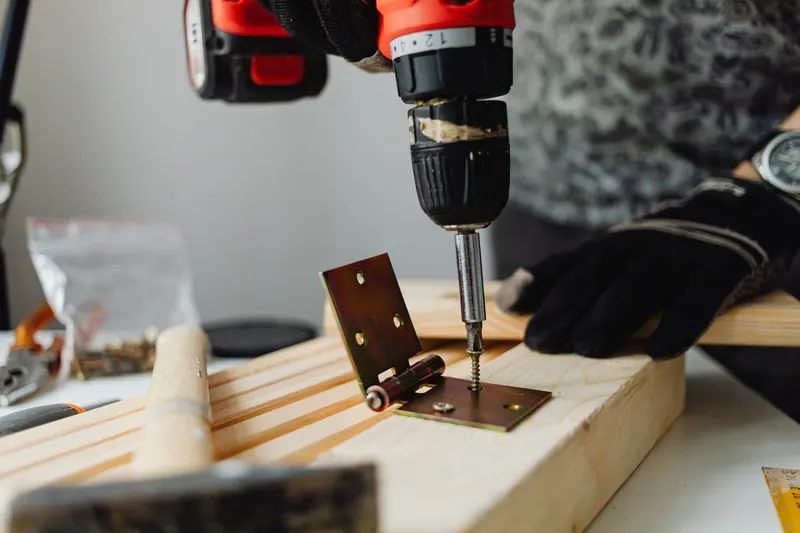
Every combi drill has three modes on the collar: drill for wood and metal, driver with a numbered clutch that slips at a set torque so screws are not overdriven, and hammer, which adds fast forward pulses for brick and block.
Makers quote torque in Nm (newton metres). Around 40 to 60 Nm covers shelves, curtain poles and flat-pack; trade drills quote 80 to over 130 Nm for large augers and hole saws. A 13 mm keyless chuck is standard on 18 V drills, 10 mm on most 12 V models.
For concrete lintels or a lot of masonry work, an SDS plus drill is faster than any combi hammer, because a piston drives the bit rather than two ridged plates. See the mitre angle calculator and the battery pages for what else shares the same packs.
Common mistakes
- Using hammer mode on tiles: drill tiles in drill mode with a tile bit, then switch to hammer for the brick behind.
- Leaving the clutch on the drill setting for screws, which strips heads and cams out bits.
- Comparing torque figures across brands as if they were measured the same way.
Guides on this topic
- What is an SDS drill and when do you need one?SDS plus and SDS max chucks, the rotary hammer action and the jobs where a combi drill struggles, explained for UK homes and renovations.Guide
- What is a combi drill?A combi drill combines drilling, screw driving and a hammer mode for masonry in one cordless tool. Here is how the modes, clutch and gears work.Guide
- SDS drill vs combi drill for brick, block and concretePiston hammer against ratchet hammer: how SDS and combi drills differ, typical hole sizes in brick and concrete, and when each is worth buying.Comparison
- SDS drill settings: rotary stop, hammer and chisel modesWhat each SDS drill mode does, from rotary only to hammer only, plus the chisel angle setting, safety clutch and electronic kickback control.Guide
- How to use an SDS drillA step by step guide to using an SDS drill: fitting and greasing bits, picking the right mode, drilling clean holes in concrete and staying safe with dust.How-to
- How to use a combi drillFitting bits, choosing drill, driver or hammer mode, setting the clutch and gear, and drilling clean pilot holes, with standard eye protection.How-to
- How to drill into brick, block and concreteHammer mode, masonry bits, plug sizes and checking for cables and pipes before drilling a UK wall, plus when to switch to an SDS drill.How-to
- How to core drill with an SDS drillHow to cut large holes in brick with SDS core bits: choosing TCT or diamond cores, pilot drills, hammer or rotary mode, and when a dedicated core drill is needed.How-to
- How to break up concrete with an SDS drillUsing an SDS drill in hammer only mode with point and flat chisels to remove tiles, break small slabs and chase walls, and when to hire a bigger breaker.How-to
- Should you hire or buy an SDS drill?When hiring an SDS drill or breaker makes sense, when buying is better value, and what to check when you collect a hire drill for a one off job.Guide
- Drill clutch and speed settings explainedWhat the numbered clutch ring and the 1 and 2 gear switch on a cordless drill do, with starting settings for screws, wood, metal and masonry.Guide
- Drill chuck slipping or bit wobbling: causes and fixesWhy drill bits slip or wobble in a keyless chuck: tightening technique, worn jaws, round bits in hammer mode, and when to replace the chuck.Fix
- Drill bit stuck in the chuck: how to get it outHow to free a drill bit stuck in a keyless chuck on DeWalt, Makita and other cordless drills, plus how to change bits so they grip without jamming.Fix
- Cordless drill smoking or smelling hot: what to doWhat to do if your cordless drill smokes or smells of burning, how to tell a hot motor from a battery problem, and the common causes and fixes.Fix
- Cordless drill not working: what to checkBattery contacts, the direction switch lock, overheating cut outs, worn brushes on older drills and when to get a cordless drill repaired.Fix
- Corded vs cordless SDS drill: which should you buy?Corded and cordless SDS drills compared on impact energy, runtime, weight and battery cost, and which jobs still suit a 240 V or 110 V model.Comparison
- Combi drill vs impact driver: which do you need first?How a combi drill and an impact driver differ in action, bits and jobs, with a spec table and advice on which to buy first for UK homes.Comparison
- Combi drill vs hammer drill: is there a difference?Combi, hammer, percussion and impact drill all describe similar tools in the UK. Here is what each name means and which one suits your walls and jobs.Comparison
- Combi drill vs drill driver: do you need the hammer?The only real difference between a combi drill and a drill driver is the hammer mode. Here is when you need it, with a Makita spec comparison.Comparison
- Can you use normal drill bits in an SDS drill?How to use round shank and hex drill bits in an SDS drill with an adapter or quick change chuck, why hammer must be off, and why SDS bits need an SDS chuck.Guide
Buying guides on this topic
- Best combi drills for home DIYCombi drills for shelves, curtain poles and flat-pack, compared by weight, torque, voltage and the batteries and charger included in each kit.Buying guide
- Best combi drill kits with batteries and charger18 V combi drill kits from DeWalt, Milwaukee, Makita and Bosch compared by torque, the batteries and charger in the box, chuck size and gears.Buying guide
- Best compact and sub-compact combi drillsCompact 12 V and short 18 V drills compared by weight, torque and what is in the box, from bare units to kits with batteries and a charger.Buying guide
- Best cordless SDS drillsCordless SDS plus hammer drills compared by impact energy in joules, concrete capacity, modes and whether batteries and a charger are included.Buying guide