Fix
Mitre saw not cutting square: how to calibrate it
Published
Note: This page contains affiliate links. If you buy through them we may earn a commission at no extra cost to you. Learn more
In short
Unplug the saw, check the blade is square to the fence and table with an engineer's square, then run a five cut test on a board to measure small errors. If it is out, adjust the mitre scale, detent plate or fence and the bevel stop following your manual. Also check for a blunt or warped blade, debris under the work and a loose slide.
Products for this job
Compare all 7 productsMetabo KGS 254 M: 254 mm sliding saw, 92 mm deep
Check price on AmazonAffiliate linkDeWalt DWS774: 216 mm slide saw, 250 mm wide, XPS
Check price on AmazonAffiliate linkEvolution R255SMS+: 255 mm multi-material sliding saw
Check price on AmazonAffiliate link
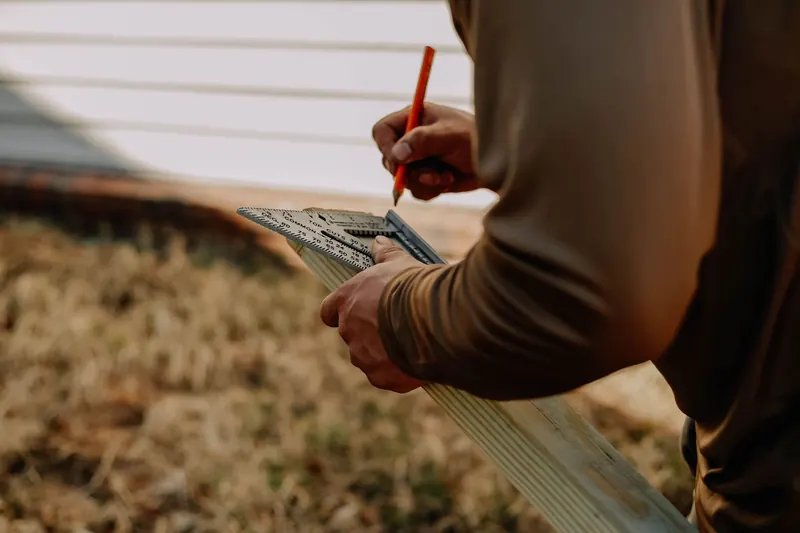
A mitre saw that cuts slightly out of square causes gaps in every corner and boards that never quite line up. The cause is often a small adjustment after transport or a knock, but blades, debris and technique can also be to blame. This guide shows how to find the error and correct it.
Rule out the simple causes
Before adjusting anything, check the basics. Many out of square cuts come from the work, the blade or the way the cut is made, not from the saw's settings.
- Sawdust or a chip under the board or against the fence.
- A blunt, bent or dirty blade, or a loose blade bolt.
- A bowed board that rocks against the fence.
- Pulling a sliding saw towards you through the cut, which lets the blade deflect.
- Lowering the head too fast so the blade flexes.
- Mitre or bevel lock not fully tightened.
Check the blade against the fence and table
Unplug the saw or remove the battery. Lower the head and lock it down. Set the mitre and bevel to 0. Place an engineer's square or a reliable combination square against the fence and the flat of the blade, avoiding the teeth. Then check the blade against the table for the bevel.
Any visible gap shows which adjustment is needed. A square is a quick check; the five cut test finds much smaller errors.
Mitre
An angle across the face.
Bevel
A tilt through the thickness.
Compound
Both at once, as on coving.
The five cut test
This test multiplies a tiny mitre error so you can measure it. Use a flat piece of sheet material with four straight edges, around 300 mm square or larger.
- 1
Number the four edges 1 to 4.
- 2
Cut a thin strip off edge 1 with edge 4 against the fence.
- 3
Rotate the board and cut edge 2 with edge 1 against the fence.
- 4
Repeat for edges 3 and 4.
- 5
Make a fifth cut on edge 1 and keep the offcut strip.
- 6
Measure the width of the strip at each end; the difference divided by 4 is the error per cut, approximately.
Adjusting the mitre
If the test shows an error, adjust following your saw's manual. On many saws you loosen the screws holding the fence or the detent plate, align the blade to the fence at 0 using the square, retighten and re-test. Others have an adjustable pointer and a separate adjustment for the 0 detent. The DeWalt DCS782N listing, for example, mentions a stainless steel detent plate and cam lock.
Once 0 is right, check the 45 degree detents with a combination square or a test cut.
Adjusting the bevel
For bevel errors, set the head to 0 bevel and check against the table with a square. Most saws have a bevel stop bolt or cam that you adjust until the blade is exactly square. Then check the 45 degree stop the same way. Bevel scales may need resetting after.
Some saws, like the Metabo KGS 254 M and KGS 305 M, can tilt slightly past 0 for undercuts, so make sure you are on the correct stop.
Sliding saw checks
On sliding saws, play in the rails can make the blade drift during the cut. Clean the rails, check for loose bolts and follow the manual for adjusting bearings or rail clamps. Cut by pushing away from you at a steady pace.
When the blade is the problem
A blade with a bent plate, missing teeth or built up resin cuts unevenly and wanders. Clean it with a resin remover or replace it. A thin kerf blade can flex more on large, deep cuts. See mitre and circular saw blades explained.
Note:Always unplug the saw or remove the battery before checking or adjusting the blade, fence or stops. Keep fingers away from the teeth. If you are unsure about an adjustment or the saw has been damaged, use an authorised service agent.
If it still will not cut square
If the saw cannot be brought into square, the casting, arm or turntable may be damaged, often from a fall. Contact the maker's service agent. If you are replacing it, compare saws in our mitre saw guide and sliding mitre saw guide. Learn safe technique in how to use a mitre saw.
Frequently asked questions
How accurate should a mitre saw be? For trim and joinery, small errors add up across corners, so aim for no visible gap against a good square and a near zero result on the five cut test.
Can I use a cheap square? Check it first: draw a line along it, flip it and draw again. If the lines differ, the square is not true.
Why are my 45 degree cuts off but 0 is fine? The 45 degree detent may need adjusting, or the scale pointer is off. Check with a combination square or test cuts.
Does the laser need adjusting too? Often yes. Lasers drift with knocks. Align it after the blade is calibrated, following the manual.
What you need
- Check price on AmazonAffiliate link
Metabo KGS 254 M: 254 mm sliding saw, 92 mm deep
- Check price on AmazonAffiliate link
Evolution R255SMS-DB+: double bevel, 300 x 80 mm
- Check price on AmazonAffiliate link
Metabo KGS 18 LTX BL 216: kit with 4 Ah pack and charger
From: Best cordless mitre saws