How-to
How to cut straight with a circular saw and guide rail
Published
Note: This page contains affiliate links. If you buy through them we may earn a commission at no extra cost to you. Learn more
In short
Clamp a straight edge to the board at the right offset from your line, so the saw's base runs along it, or use a guide rail your saw is compatible with. Measure the offset from the blade to the base edge, mark it at both ends of the cut, clamp, then cut steadily with the base pressed against the guide. Support both sides of the sheet.
Products for this job
Compare all 8 productsMakita DHS660RTJ: brushless saw kit, 2 x 5 Ah
Check price on AmazonAffiliate linkBosch GKS 18V-57-2 GX: rail ready saw in L-BOXX
Check price on AmazonAffiliate linkDeWalt DCS572N: 184 mm brushless saw with brake, bare
Check price on AmazonAffiliate link
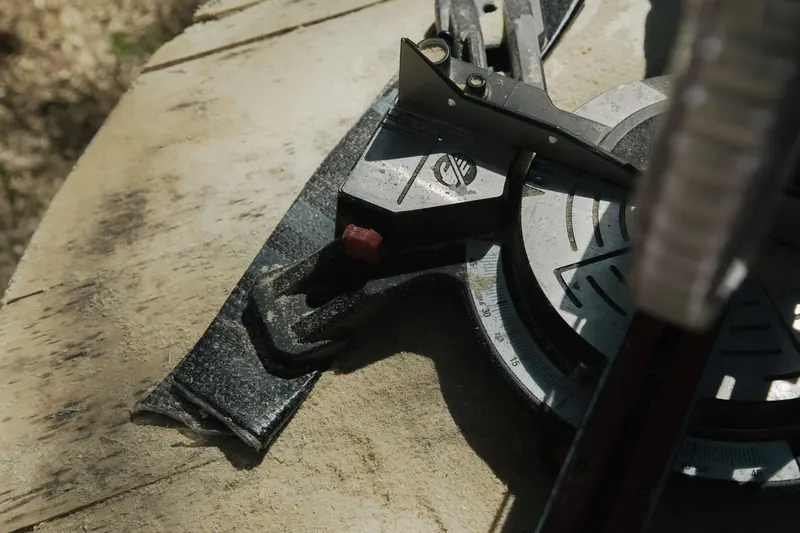
Freehand cuts with a circular saw wander, even with a steady hand. With a simple straight edge or a guide rail, a standard saw can make long, straight cuts in ply, MDF and worktops that rival a track saw. This guide explains the offset method, rail compatible saws and how to get a clean edge.
Option 1: a clamped straight edge
Any straight, rigid edge will do: the factory edge of a strip of ply or MDF, an aluminium rule or a level. Clamp it to the sheet so the saw's base runs along it. The key is measuring the offset, the distance from the edge of the base to the blade.
- 1
Measure from the edge of the saw base to the nearest tooth on the blade.
- 2
Mark your cut line at both ends of the sheet.
- 3
Measure that offset from each mark towards the side the base will run.
- 4
Clamp the straight edge to those offset marks.
- 5
Check the distance at both ends again.
- 6
Cut with the base pressed firmly against the guide.
Make a zero offset jig
A cutting jig saves measuring every time. Glue and screw a narrow straight strip onto a wider base board. Run your saw along the strip once to trim the base board. That trimmed edge now marks exactly where the blade cuts, so you line it up with your mark and clamp.
Label the jig for that saw and blade, as a different blade or saw changes the offset.
Option 2: a guide rail
Some circular saws can run on a guide rail like a track saw. The Bosch GKS 18V-57-2 GX lists compatibility with the Bosch FSN rail and FSN X crosscut rail, and the Bosch GKS 18V-57 lists compatibility with Bosch, Mafell, Festool and Makita rails. Other saws use rail adaptors. A rail has a splinter strip that marks the line and reduces chipping.
Check the listing or manual before buying a rail. If you will do a lot of sheet cutting, a plunge saw may be better; see circular saw vs track saw.
| Saw | Rail compatibility stated |
|---|---|
| Bosch GKS 18V-57-2 GX | Bosch FSN and FSN X |
| Bosch GKS 18V-57 | Bosch, Mafell, Festool, Makita |
| HiKOKI C3606DPA plunge saw | HiKOKI and several other brands |
| Others | Check the listing or manual |
Option 3: the parallel guide
Most saws come with a parallel or rip guide that runs along the edge of the board. It is fine for narrow rips from a straight edge, such as cutting a decking board to width. It cannot cut a straight line if the board's edge is not straight, and it is less steady on wide rips.
Support and setup
Lay the sheet on a sacrificial sheet of rigid foam or on battens on both sides of the cut so neither piece falls or pinches the blade. Set the blade depth a few millimetres below the sheet. Use a sharp blade with more teeth for sheet material.
Getting a clean edge
A hand held circular saw cuts upwards, so the top face chips. Cut with the good face down, put masking tape along the line, and score the line with a knife on veneered boards. A guide rail's splinter strip is the best fix. See saw blades explained.
Common mistakes
Measuring the offset to the wrong side of the blade, forgetting the blade's kerf, clamps that the saw motor hits halfway, and a guide that is not quite straight. Check the full length of the cut path before starting. More on technique in how to use a circular saw.
Note:Make sure clamps cannot slip and that the saw's motor and cable or battery will clear them along the whole cut. Keep both hands on the saw, stand to one side of the blade line, and wear eye, ear and dust protection. Follow the manual and HSE woodworking guidance.
Frequently asked questions
How do I measure the offset? Measure from the edge of the saw base to the nearest edge of a tooth on the blade, on the side the guide will run.
Can I use a spirit level as a guide? Yes, if it is straight and clamped firmly, though a dedicated straight edge is less likely to get damaged.
Do I need a track saw? Not for occasional sheet cutting. A straight edge or rail compatible saw works well. For frequent work, a track saw saves time.
How do I stop the saw drifting away from the guide? Keep gentle sideways pressure towards the guide and feed steadily. A rail locks the saw in place.
What you need
- Check price on AmazonAffiliate link
Makita DHS660RTJ: brushless saw kit, 2 x 5 Ah
- Check price on AmazonAffiliate link
Makita DSP600ZJ: 36 V plunge saw with 2 x 5 Ah and rail
- Check price on AmazonAffiliate link
Evolution R255TBL+: 255 mm, 85 mm deep, rack and pinion fence