Guide
Impact driver bits: what makes them impact rated
Published
Note: This page contains affiliate links. If you buy through them we may earn a commission at no extra cost to you. Learn more
In short
Impact rated bits are made from tougher steel and usually have a torsion zone, a narrow section that flexes slightly to absorb the hammer blows, so they last far longer than standard bits. Use 1/4 inch hex shank bits, match the tip to the screw (PZ2 for most UK wood screws, PH2 for plasterboard, Torx for many decking screws) and replace worn tips promptly.
Products for this job
Compare all 6 productsDeWalt DCK276P2 twin pack with DCF887 impact driver
Check price on AmazonAffiliate linkMilwaukee M18FID2: 226 Nm Fuel driver, two 5 Ah packs
Check price on AmazonAffiliate linkBosch GDR 18V-215: 215 Nm with auto modes, L-BOXX
Check price on AmazonAffiliate link
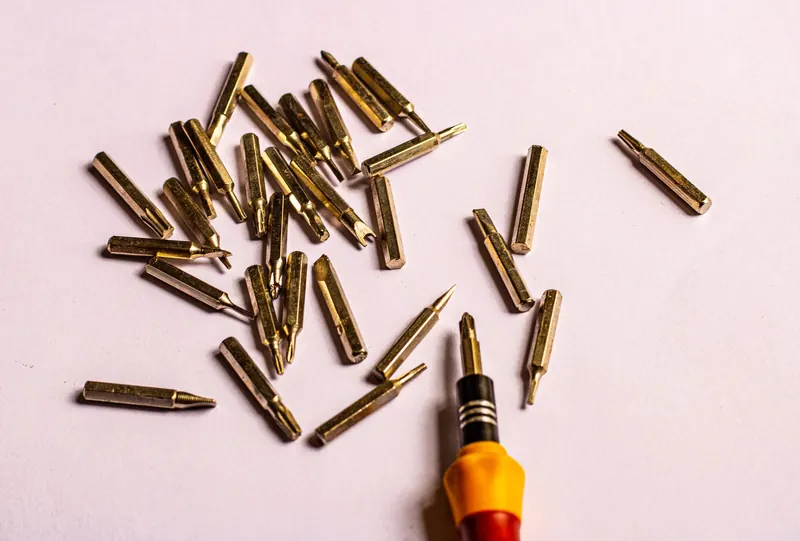
Standard screwdriver bits can snap, shatter or round off quickly in an impact driver. Impact rated bits are designed for the repeated blows. This guide explains the hex shank sizes, what the torsion zone does, which tip to use on UK screws, and how hex shank drill bits fit in.
Hex shank sizes
Impact drivers take a 1/4 inch (6.35 mm) hex shank. Two common styles fit: short insert bits, often 25 mm long, which sit in a magnetic holder, and longer power bits, 50 mm and up, with a groove that locks directly into the driver's collet. Both are 1/4 inch hex.
Longer bits reach recessed screws and are easier to see. Short bits in a holder are cheaper to replace.
| Style | Typical length | Use |
|---|---|---|
| Insert bit | 25 mm | In a magnetic bit holder; cheap to replace |
| Power bit | 50 to 150 mm | Direct in the collet; better reach |
| Hex shank drill bit | Various | Pilot holes in wood and metal |
| Nut driver | 50 to 65 mm | Hex head screws and small nuts |
What makes a bit impact rated
Impact bits use harder, tougher steel, often with a different heat treatment from standard bits. Many have a torsion zone: a thinner, waisted section between the shank and tip that twists slightly under each blow, then springs back. This spreads the shock instead of letting it crack the tip.
Impact bits are usually black, dark grey or coloured, and are clearly labelled impact or impact rated on the pack.
Choosing the right tip for UK screws
A tip that fits snugly is the best way to avoid cam out and stripped heads. Most UK wood screws are Pozidriv, marked with fine lines between the cross; use a PZ bit, usually PZ2. Plasterboard screws are usually Phillips; use PH2. Many decking and construction screws now use Torx (TX), which grips very well under high torque.
- PZ2: most general wood screws in the UK.
- PZ1: small screws, hinges and fittings.
- PH2: plasterboard screws.
- TX20, TX25, TX30: many decking and structural screws, check the box.
- Hex nut drivers: roofing and self drilling screws.
Hex shank drill bits
You can drill wood and thin metal with an impact driver using hex shank twist bits, spade bits and auger bits. Impact rated versions are tougher. They are handy for quick pilot holes without swapping tools, though a drill is better for large or accurate holes and an impact driver should not be used for masonry.
Bit holders and magnetic sleeves
A magnetic bit holder keeps insert bits in place, and a sliding sleeve guides the screw so it starts straight. That makes one handed starting easier and reduces wobble. Choose impact rated holders too, as cheap ones crack.
Making bits last
Push firmly in line with the screw so the tip stays engaged. Use the lowest speed that does the job. Replace bits as soon as the tip shows rounding, because a worn bit damages screw heads. Keep spares of your most used tip.
Many twin pack and impact driver kits include a few bits. Our impact driver guide shows box contents.
Note:Wear eye protection, as a shattering bit or screw head can fly off. Keep your free hand away from the bit, and follow the driver's manual.
Sets worth buying
A small impact bit set with PZ1, PZ2, PZ3, PH2, a few Torx sizes, a magnetic holder and some nut drivers covers most home and building jobs. Add longer 50 to 90 mm power bits in your most used sizes for recessed screws. Larger sets with dozens of bits look like value but often include sizes you will rarely use.
Store bits in a case so you can see when a size is missing or worn.
Can I use impact bits in a drill?
Yes. Impact rated hex bits work perfectly in a drill's chuck or a bit holder, and they last longer than standard bits there too. The reverse, standard bits in an impact driver, is what to avoid.
If you are setting up both tools, a twin pack keeps batteries shared; see our twin pack guide.
Frequently asked questions
Can I use normal bits in an impact driver? They will fit, but many crack or wear quickly. Use impact rated bits.
What is the difference between PZ and PH? Pozidriv (PZ) tips have extra ribs and fit Pozidriv screws, common on UK wood screws. Phillips (PH) fits Phillips screws, such as plasterboard screws. Using the wrong one causes cam out.
Why do my bits keep breaking? They may not be impact rated, the tip may not fit the screw, or you may be using too much speed and not enough pressure.
Do I need Torx bits? If you use modern decking or construction screws, often yes. Check the screw box for the size.
What you need
- Check price on AmazonAffiliate link
DeWalt DCK276P2: DCD996 and DCF887, 2 x 5 Ah
- Check price on AmazonAffiliate link
Bosch GSB 18V-110 C and GDR 18V-210 C, 2 x 5 Ah
- Check price on AmazonAffiliate link
Fein MultiMaster MM 500 Plus Top: 350 W corded, 30+ accessories